The BBC’s next director general Matt Brittin has never run a broadcaster, commissioned a programme, or worked a day at the Corporation. That’s the point.
When I first heard this story I thought it wasn’t true. The rumours that former Google EMEA boss Matt Brittin (below) would become the actual director-general of the BBC didn’t seem credible.
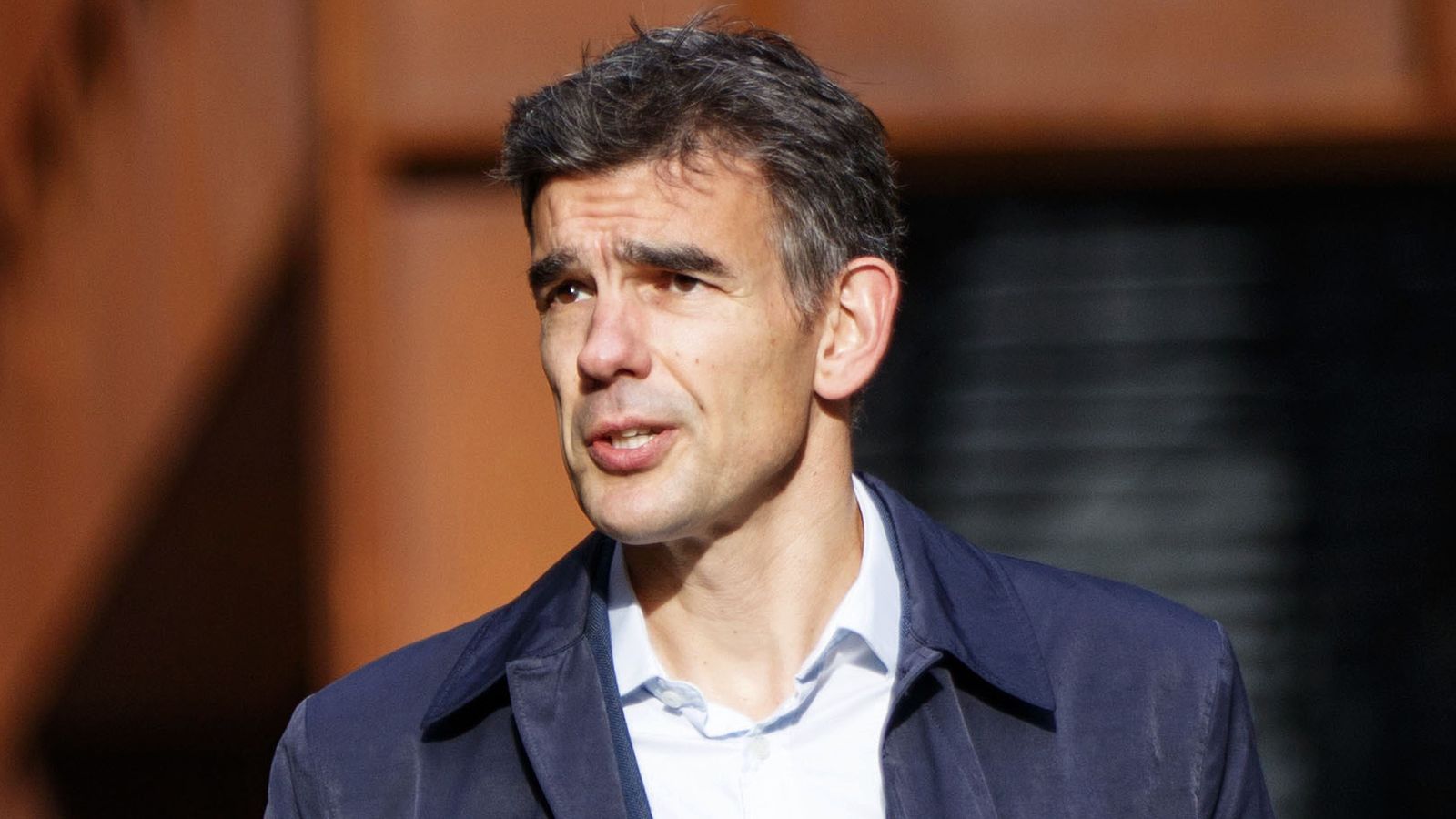
My cynical head software led me to conclude that Brittin’s name was being leaked as a spoiler; perhaps to make the real choice seem more appealing by comparison. In hindsight, it’s more likely the BBC leaked it to dampen the shock of the announcement, and it will still be a surprise to anyone who’s interested in the fate of the BBC (including some newspapers for which the BBC seems to be all they care about, other than Princess Diana and Madeleine McCann).
Why so shocking? Google’s former president for Europe, Middle East, and Africa — where he spent 18 years — will be the first director general in more than 80 years to lead the corporation without any experience of broadcasting or programme-making.
Even his arrival at Google was, in his own words, “completely random”, according to Brittin himself.
Brittin told me in a 2023 interview that Google needed someone strategic, who understood the media industry and “a bit about technology,” and he “looked like the right kind of person.”
Looked like the right kind of person. The BBC’s board has run the same calculation in reverse. And It’s not random at all.
The BBC’s governing board may be many things, but it does not make eccentric choices. It sends signals about how it wants the Corporation to change, like a chameleon willing itself to change colour.
Except here’s the thing about chameleons: they don’t change colour to blend into their environment as is commonly thought. They change colour to reveal their internal state or their change in mood; it’s more about declaration than camouflage.
Go back to every notable DG appointment since John Birt — whose departure in 2000 broadly coincided with the rise of 24-hour news and popular use of the internet — and the signals are easier to interpret than the credentials:
Greg Dyke (2000–2004): Commercial TV man from LWT and Pearson who would “cut the crap” and play nice with Tony Blair’s New Labour government — famously criticised for having donated £55,000 to the Labour Party.
Mark Thompson (2004–2012): A BBC lifer who’d left to turn around Channel 4’s finances, brought back to steady the ship after Dyke’s forced resignation over the Hutton Inquiry — the safe pair of hands who understood both editorial and commercial.
George Entwistle (2012): The insider’s insider — Newsnight editor, Panorama editor, controller of BBC One — a signal that the BBC wanted to recommit to programme-making after Thompson’s commercial turn. Lasted 54 days before the Savile and McAlpine scandals ended it.
Tony Hall (2013–2020): BBC news man turned chief executive of the Royal Opera House — a signal that the corporation wanted gravitas, cultural credibility, and someone who could defend public service broadcasting on principle. A restoration appointment.
Tim Davie (2020–2025): Former PepsiCo marketing VP who’d crossed into BBC Studios and Worldwide — a signal that the BBC’s future was commercial, global, and brand-led. Resigned over the Panorama Trump edit scandal.
Matt Brittin (2026–): 18 years at Google. No broadcasting. No programme-making.
The man who ‘tried to save the newspaper industry’
Before Google, Brittin spent nearly three years at Trinity Mirror — as commercial director, then head of strategy and digital — where, by his own description on LinkedIn, he “tried to save the newspaper industry.” He did not succeed.
Then he spent 18 years at the company that was the primary reason it couldn’t be saved. Now he’s running the BBC.
In that same 2023 interview, Brittin told me he was “proud that Google’s probably the biggest supporter of journalism on the planet in terms of sending traffic and the partnerships that we have.”
So that’s something. Will his view on Google’s impact on publishing evolve now that he is the editor-in-chief of BBC News?
Since February 2025, Brittin has been a non-executive director of The Guardian. So he currently sits on the board of an editorially independent news organisation that competes with the BBC for journalism talent, audience, and institutional prestige. But not for much longer, you’d think.
But hiring the man who ran Google’s advertising business across an intercontinental region? That tells you what the BBC has decided its future is — even if nobody has said it aloud yet.
And frustratingly, what a shame that a woman is yet to be appointed to this high-profile and consequential role in UK media. Not Matt’s fault, but what kind of signal does it send that it still hasn’t managed to find a suitable leader among half the British population?
Protect the form, replace the function
In the same Cannes interview, Brittin described YouTube’s living room screen as the fastest-growing in the world and creators as “one person broadcast companies.” Hold that thought while we look at the other big BBC story from the last week.
Culture Secretary Lisa Nandy proposed a permanent Royal Charter for the BBC, replacing the 10-year renewal cycle that currently expires at the end of 2027. Under the new model, the BBC would sit alongside the Bank of England and the British Film Institute as a permanent chartered body — constitutionally embedded, protected from what Nandy called “culture war” attacks.
I recently appeared on the Media Club Podcast with Matt Deegan where this idea was broadly dismissed as an ‘old chestnut’ — something which the BBC always demands in Charter Renewal negotiations but is not taken seriously. Personally I think politicians should be made to debate the future of the BBC, just like anything taxpayers are forced to pay for, but that’s for another day.
Made together, these two moves tell a clear story.
The charter preserves the form: this institution is so important we’re giving it constitutional permanence.
The appointment replaces the function: the thing that made the BBC so important — journalism, broadcasting, programme-making — is no longer what the board needs from the person at the top.
If those two decisions were made about a brand you were buying media against, you’d call it what it is: a rebrand dressed up as continuity.
The name stays. The reputation persists. And the thing that earned both gets quietly swapped out.
Reputation is a lagging indicator
This isn’t disruption (the cinematic version of history that the industry tells itself). It’s quieter than that and worse.
The BBC will still be “the BBC.” The charter will still be permanent. The editor-in-chief will still be the editor-in-chief. But underneath each of those titles, the thing that made them meaningful has been quietly replaced.
When you invest in an institution — as an advertiser, a partner, a hire — you’re buying against its reputation. The question worth asking is whether the thing that earned the reputation is still the thing happening inside.
The BBC’s board looked at what the corporation needs and concluded it isn’t a journalist, a broadcaster, or a programme-maker. They may be right.
But if they are, what is the “BBC” the permanent charter is protecting?
 This article first appeared in Ad-verse Reactions, a newsletter written by independent journalist and consultant Omar Oakes, covering the economics, power structures and unintended consequences shaping advertising and media. You can subscribe to Ad-verse Reactions for regular analysis at omaroakes.substack.com.