
Damon Collins: 40 Years in advertising – here’s to choosing the difficult path

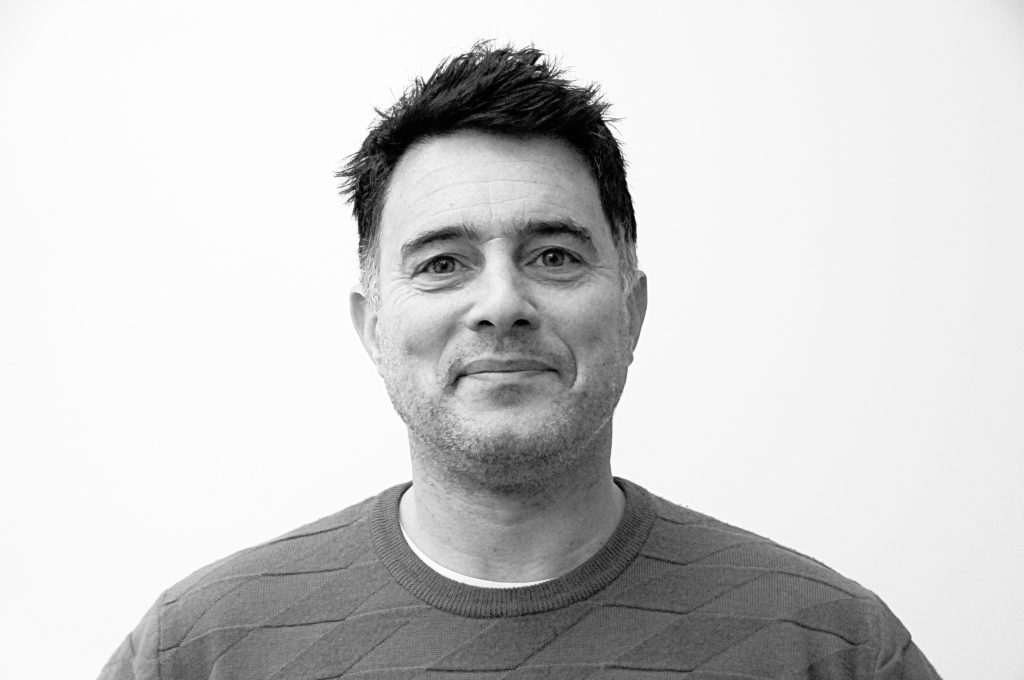
At 6 o’clock on a snowy Sunday morning in 1986 Mary Wear and I drove my VW Beetle round London and set up a tent outside the front door of a selection of agencies we wanted to work at.
Mary stood inside the tent and stuck our black Art Care portfolio through the tent flaps.
I took two or three photos with my Olympus OM10. Then we wrapped up the tent as quickly as we could and sped off before anyone could complain.
We processed the black and white negatives in the dark room back at college and made 10 by 8 prints, stuck them on poly board and wrote in black marker underneath “We’re waiting to show you our book.” Along with a phone number.
We drove back into town and hand delivered them addressed to the creative directors at those agencies.
Then waited excitedly by the phone. The land line. At home.
Nothing happened.
For a good few days.
Then the phone rang. It was an utterly disinterested PA. Making one of a hundred tedious calls that day.
But to us it was the most important phone call we’d ever received.
“Can you come in… (some date far in the future)?”
“YES!”
Over the next week or so we had a few more calls.
One of the creative directors we’d targeting was Barry Smith at FCB.
We turned up at 82 Baker Street one morning. Well before any of the creative department were in. They started dribbling in around 10ish and we were called in to see Barry.
We walked through the creative department past an assortment of large, empty offices into a nicely carpeted corner one.
Barry briskly flicked through our book, lying on the nice carpet, then flipped it closed. “I’d love to hire you” he said “but we’ve just lost British Airways and Dulux and have had to make a load of redundancies so can’t hire anyone right now.“
“Yes” we replied “we did notice quite a few empty offices. Would we be able to sit in one of them do you think? It’d be great to be able to have somewhere in the centre of London we can work and be close to the other agencies we want to get a job in.”
Barry thought for a beat. (That was a long time for him.) “OK. I’m not going to pay you.”
“No of course.”
“But I’ll see if I can get you a brief to work on.”
“Amazing!”
He led us to an office that looked straight from Mad Men.
Two Chesterfield sofas. An electric typewriter. A filing cabinet.
We sat down, grinning.
Within what seemed like seconds a young account person appeared at the door.
“Are you the new team? Great. We’ve got a brief one of the senior teams was briefed on two weeks ago but hasn’t done anything on it.” That happened back then. Lunches were still a serious business in the 80s.
They briefed us on the radio ad and sprinted off to fight the next fire.
We wrote some stuff and typed it up. (Typing had been our favourite class at the Hounslow copywriting course we were still officially on ’til June. Touch typing to Dancing Queen by Abba was the highlight.)
The account person dashed back in grabbed the script and read it.
“Great! Come with me!”
We dutifully followed, downstairs to the ‘executive meeting room’ floor.
We were pushed into one of the meeting rooms. Inside we saw wood panelling, a large shiny table and three clients.
“This is Mary and Damon, our creative team. They’ve got some scripts for the London Transport brief. Ok guys, read them out.”
Gulp.
We read them out and the client liked them.
Later that day another account person smashed open our door. Another team hadn’t bothered to work on another brief. We flung ourselves on it.
This happened over and over again.
We got a bad reputation amongst the rest of the department for not wanting to go to the pub every afternoon at five o’clock and instead stay to hoover up all the briefs the people who were down the pub weren’t working on.
They locked the agency every night at 9.30 and we had to sweet-talk one of the board directors who had keys to lend us theirs so we could continue working into the night and on weekends.
Within two weeks we had a bunch of posters, press ads and radio commercials in production.
Which led to the powers that be deciding it might be wise to keep the people doing the work around.
And we were offered our first job.
Looking back on the past 40 years, it seems like a hell of a long time ago.
And for good reason.
There was no AI back then. Or internet. Or computers! (Hell, the digital calculator was still a novelty!) It was an analog age in which editors spliced 35mm film on Steenbecks and sound engineers stuck together bits of quarter inch tape they’d cut with razorblades. The delicious fragrance and reassuring squeal of Magic Markers on layout paper filled the air.
In many ways everything’s changed since I started in this business.
But in other ways nothing’s changed.
There are still, for example, ad folk who choose the difficult path. Spending their days striving for fresh, innovative work. Forever seeking out that rarest of partners, the client who actually understands consumers get turned on by ideas that grab their attention, treat them with intelligence and make them feel something.
And there are, also, still those who make a keen living producing 98% of the advertising slurry that pollutes the world.
For the former, the struggle to get that 2% of half-decent stuff to 3% remains a continually challenging but important (and truly satisfying), mission.
Regardless of how anyone finds their way into the ad business, it’s what they choose to do once they’re in that counts.
Here’s to choosing the difficult path.
Damon Collins was one of the founders of London creative agency Joint in 2012.





Lovely piece, Damon. Read it twice, just for the ride.