
It seemsthat we still haven’t fully realized just how profoundly the pandemic has changed consumer behavior. People have grown accustomed to making purchasing decisions while scrolling through social media feeds, and the level of trust in a blogger is significantly higher than an advertising video. Today, the only force that truly rivals the authority of influencers is ChatGPT. Why has the path to purchase become so unpredictable, and what does this mean for marketers?
How the path to purchase has changed
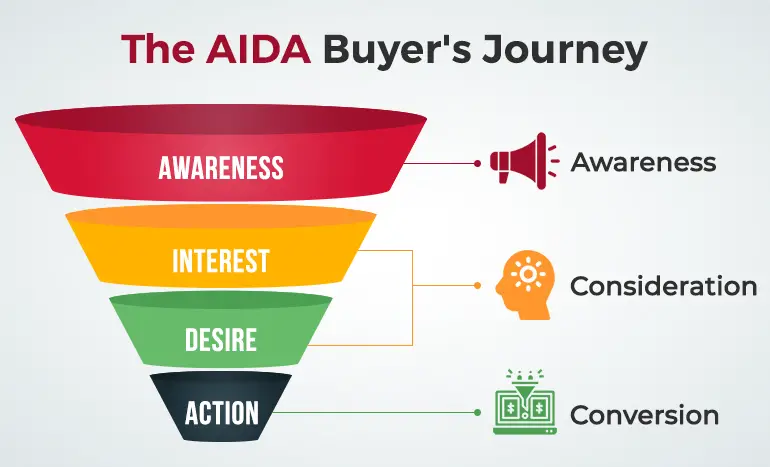
The classic AIDA funnel (below) described the purchasing decision process as linear and sequential. As the digital environment grew in influence, this scenario shifted. Google refers to the new reality as the messy middle — the space between intent and purchase, where a person constantly moves between two opposing states: expanding their choices and then immediately narrowing them down, rejecting options under the influence of various triggers.
In the context of social commerce, the messy middle evolves into a continuous state of interaction with content — a model known as the infinite loop. This is a cyclical process in which a person may see a product in their feed, make a purchase, and then return to the content ecosystem not only as a passive viewer but also as a creator of reviews, unboxing videos or tutorials. Each purchase initiates a new cycle of engagement. Consumers can enter the loop and exit it at any moment.
The journey can begin with a random video and change direction several times before a purchase decision is finally made.
Social commerce has become a powerful driver of impulse buying — purchasing decisions arise not from an actual need, but from context. Overall, in e-commerce, between 40% and 80% of purchases are unplanned. The real question is whether your brand can appear in the right place at the right time when that moment is almost impossible to predict.
A telling example is the story of the Stanley Quencher tumbler. In 2023, a TikTok user posted a video showing the completely burned interior of a car and an almost undamaged tumbler with ice still inside, having survived the fire. The video received 98 million views. The brand could neither anticipate the incident itself nor forecast the scale of its impact. The only thing Stanley truly controlled was its own response — and that response only strengthened the emotional connection with the brand. Since then, the hashtag #StanleyCup has generated nearly 7 billion views across social media, while the company’s revenue grew to $730 million in 2023, up from $402 million in 2022.

What consumers expect now
When impressions became instantly accessible in the digital environment, they turn into a full-fledged criterion for choice. For today’s consumer, how a brand makes them feel is just as important as what that brand actually sells.
The demand for emotional experiences was quickly embraced by online commercial platforms. On a physical store shelf, a backpack is simply a set of features. Online, however, you see it in the mountains, at an airport, or in the rain at a festival. It’s no longer just an object, but a lifestyle and the experiences that are possible with it.
The shift to online channels gave companies access to data, enabling more precise personalization of offerings. Consumers have become so accustomed to this that they now react negatively when a personalized approach is missing. According to McKinsey, 76% of people become disappointed when they don’t receive personalized interactions.
However, modern consumers change their preferences quickly and often unpredictably. Sudden spikes in demand for specific trends create an advantage for small or craft producers that can adapt their products in very short timeframes. For large brands, the situation is more complex. Scale requires standardization, and standardization does not pair well with short-lived consumer demands.
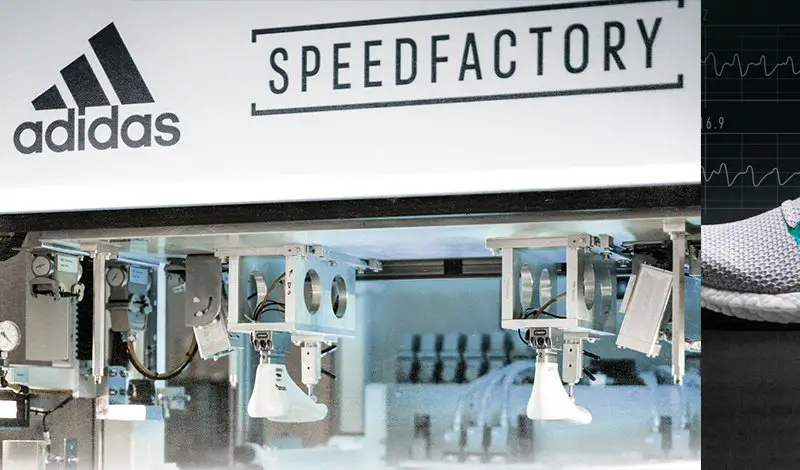
A notable example is Adidas’ Speedfactory experiment. The company aimed to shorten lead times and produce customized models by launching fully automated factories. It released the AM4 sneaker line, designed to reflect the needs of runners in different cities, such as New York and London. Production time was reduced from 12 months to just 4. But reconfiguring the robots for new designs turned out to be too expensive and time-consuming, and the project was closed.
Chaos is the new normal
In a chaotic environment, it becomes harder to control the customer journey, but we can still influence decision-making. I have observe a clear trend of brands increasingly turning to behavioral economics and neuromarketing, as cognitive biases and emotional responses work regardless of the channel through which a consumer interacts. According to NIQ BASES, advertising optimized using neuroscience delivers up to a 20% increase in sales compared to standard campaigns.
The core task of marketing remains unchanged: to reduce the consumer’s cognitive load and make choices easier. However, with the emergence and deep integration of AI into everyday life, this process is no longer solely the responsibility of marketers. People are increasingly looking to simplify their lives by delegating decisions to AI assistants. Brands are entering a new level of competition — not only competing for consumer attention, but also for the recommendation of algorithms.
AI has become a powerful tool for navigating this rapidly changing environment. The ability to interact with it effectively is now a basic skill for the modern marketer. However, algorithms are trained on millions of generalized patterns, while each customer is an individual. This is why the importance of critical thinking and the ability to find unconventional solutions is only increasing. The human must serve as the filter that separates useful insights from informational noise and adapts them to the real needs of the business.
Ultimately, chaos is the environment in which we now operate. Those who win will be the ones who find the right balance between flexibility and brand DNA, between speed of response and a deep understanding of their audience.
 Igor Blystiv is global marketing and innovation officer at Kormotech, an international company with Ukrainian roots that has been producing cat and dog food under the Optimeal, Delickcious, Club 4 Paws, Hav!, Miau! and My Love brands since 2003.