
By Harry Corin, founder, Elevo.
When I first saw BrewDog’s recent OOH campaign using the word “suicide”, I didn’t feel outrage. I felt a very old, very familiar ache. Anyone who has been bereaved by suicide will know it. It’s a sudden tightening in the chest, a sting behind the eyes, a quiet thought: really? Then, deep breathing and raised eyebrows.
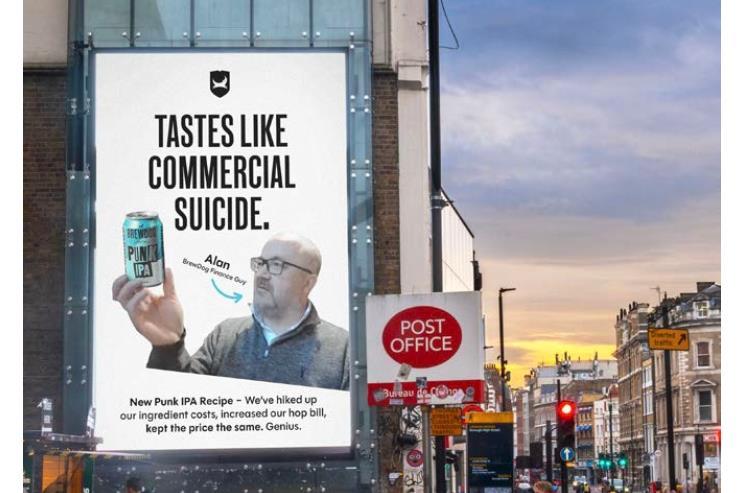
And now, after a predictable backlash from suicide-prevention charities and people with lived experience, BrewDog has withdrawn the ad.
The quick reversal doesn’t undo the harm. It only underlines why this language is so painful, and why I’m writing this at all. My dad died by suicide when I was 12, and that loss shaped everything that followed: the way I work, the way I listen, the way I move through the world.
In fact, I’ve spent my career helping organisations think carefully about mental health and suicide prevent, and a big part of that involves talking to people about the power of language.
Some people will argue that suicide is just a word.
I wish that was the case for me. But unexpectedly hearing the word can feel like a wound is being ripped open, with all those questions about why, and whether there was something that would’ve changed the outcome start flooding in.
If my experience is shared by even small percentage of the people who’ve been bereaved by suicide – a number which grows by thousands every year, by the way – and that’s a lot of pain being generated in a bid to shift a few Punk IPAs. And on top of that, when a brand treats a word like “suicide” casually, it can unintentionally normalise a lack of sensitivity at a time when we desperately need the opposite.
Guidance from the Samaritans, WHO and every major suicide-prevention organisation is clear: use the word “suicide” with care. Use it only when necessary. Never use it for shock, humour or commercial impact.
So, what makes Brewdog’s truculence even more galling is that the organisation has spoken out in the past about its efforts to support the mental health of its employees.
It also begs a lot of questions about how this campaign managed to survive from someone’s ‘potential straplines’ notepad all the way to DOOH sites in London and Manchester without someone asking: what if someone who sees this has lost a loved one to suicide? Or what if they’re barely holding it together?
Even worse is knowing that the media campaign will have been planned specifically to target drinkers, given that people who misuse alcohol are at a higher risk of suicide.
I’ve worked in creative environments. I know the pressure to disrupt, cut through, push boundaries. But responsibility must sit alongside creativity.
BrewDog’s decision to withdraw the ad is the right one, and I’m glad they listened to those who spoke up. But removal doesn’t close the conversation; it opens the space for a better one. So, I’d like to invite BrewDog’s leadership, and if relevant, the agency involved, to meet with me, ideally alongside charities and people with lived experience.
My intention isn’t to start a fight, but to talk about how we collectively as an industry can do better.
Brands can be powerful forces for good. I’ve seen the difference thoughtful language can make inside a business and in society.
My hope is that BrewDog will reflect on this moment and use it to set a higher standard going forward, because when it comes to suicide, the cost of getting it wrong is far too high.
 Harry Corin is the founder of Elevo.