Tom Stone: what happens when Out of Home thinks like social?

There was something quietly revolutionary about the moment billboards stopped being billboards and started becoming content. Not just advertising you walk past, but the kind of creative execution you photograph, share and debate.
Out-of-home advertising was once the definition of traditional media, but it has somehow now become one of the most social formats in the mix.
And it happened without anyone really declaring it.
No grand announcement. No industry summit proclaiming “OOH is now digital-first.”
It just…shifted.
Screens got smarter. Creative got bolder. And brands realised that a single striking execution on Oxford Street could generate more genuine engagement than a month of paid social ads.
For anyone still filing OOH under “legacy media,” this moment should feel like a wake-up call. Out-of-home isn’t competing with social media. It’s feeding it.
OOH is building moments worth sharing
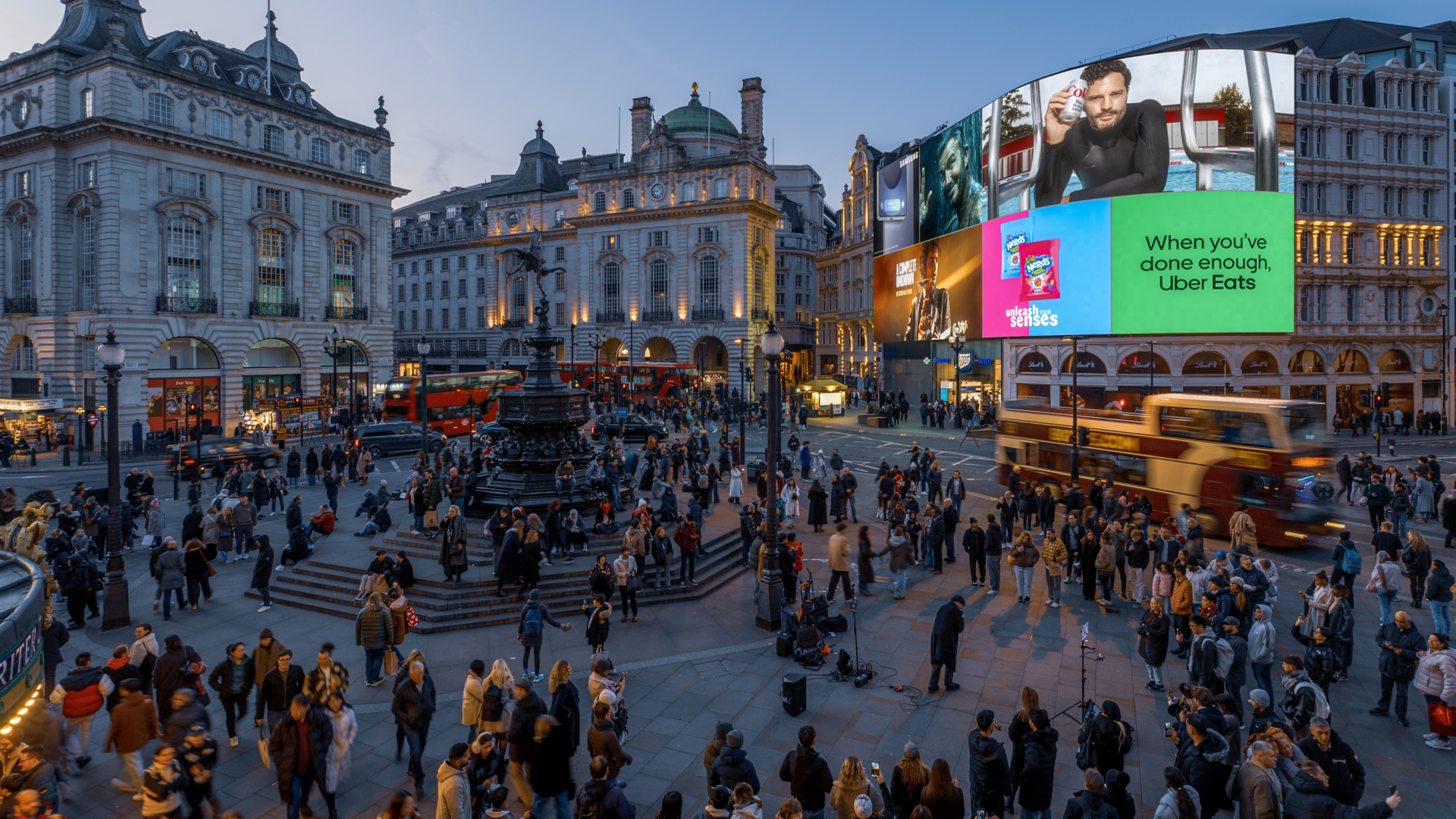
The old playbook was simple: buy space, run creative, measure footfall. Done. But that model assumed OOH lived in isolation, a one-way broadcast meant to be glanced at between tube stops or during a traffic jam.
But now, OOH is designed with two audiences in mind. The people standing in front of it and the millions who’ll see it later on their phones.
Digital screens displaying live data. 3D installations that warp perspective. Clever placements that feel less like advertising and more like cultural commentary. The best OOH campaigns today aren’t just seen, they’re screenshotted, TikTok’d, Instagram storied and dropped into group chats with “have you seen this?”
This shift has transformed OOH from a static media buy into content, and it is ideally suited to social media.
Authenticity lives in real space
There’s something inherently credible about seeing a brand show up in the physical world. It somehow feels tangible and committed. That authenticity is almost impossible to achieve with a skippable pre-roll or a sponsored post. And that authenticity compounds when it’s captured and shared organically. A photo of a brilliant billboard taken by someone who stumbled across it carries more weight than any polished brand asset pushed through paid channels. It’s peer-to-peer endorsement disguised as casual content.
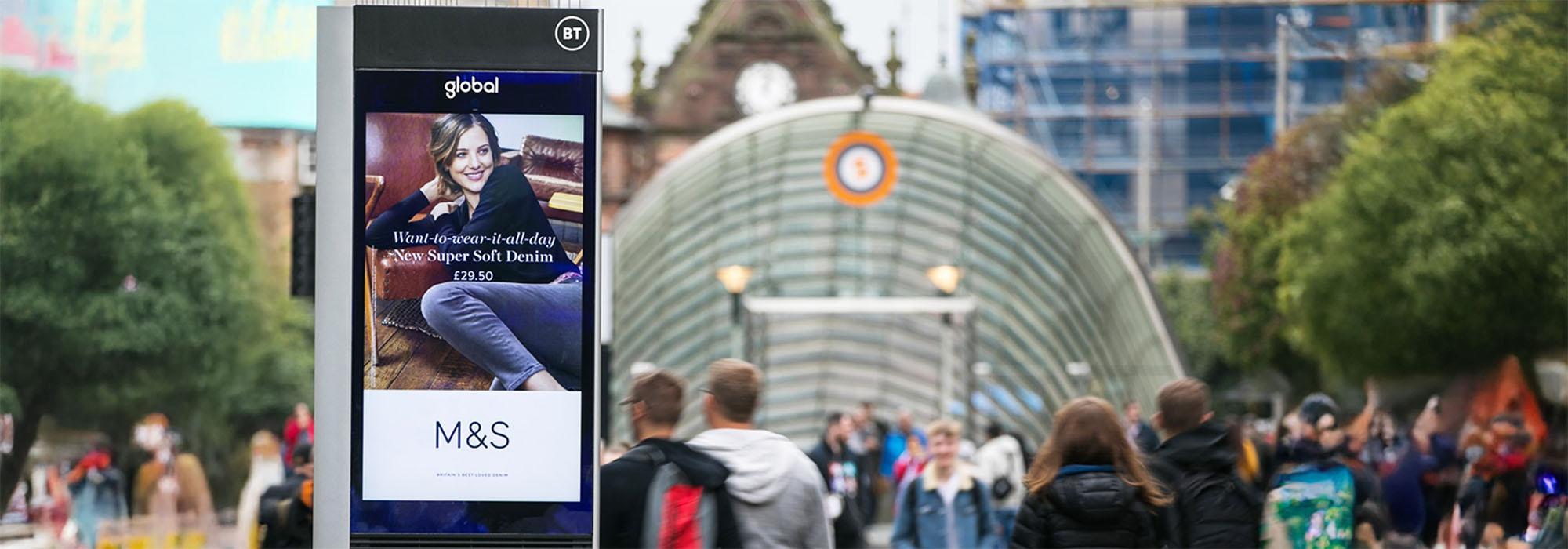
This is why the best OOH creative now gets built with virality baked in. Not in the cynical “please make this go viral” sense, but in understanding what makes people stop, pull out their phones and want to be part of the moment. Wit, surprise, cultural timing, visual spectacle are the instincts that power great social content and we now see playing out at street level. OOH became social because it remembered how to be interesting.
The activation matters as much as the creative
For all the potential exposure, many brands are still getting it wrong. The activate their OOH campaign, sit back and let the billboard run through its cycle.
Those who are doing it right know that the physical execution is just the first part of puzzle. These brands are designing entire ecosystems around OOH moments and driving their existing communities to the location through social. By encouraging interaction, photos and content creation, they can then amplify the best user-generated content back through paid social to extend the reach exponentially. To extend their reach further, some are even rewarding participation with exclusive access, product drops, or experiences that turn passive viewers into active collaborators.
The brands doing this well know it’s about creating something that people care about, wish to participate in and share. It turns one week of OOH into seven days of social momentum where a brand can gain thousands of earned impressions that cost nothing beyond the original media buy.
Brands win if they design for both screens
The biggest mistake marketers make is still thinking in silos and each team works independently of each other.
OOH needs to be created with social in mind to enable it to perform in both contexts. That way the physical placement can generate curiosity and scale while the social layer generates stickiness and conversation. When combined, they create cultural cut-through that neither could achieve alone.
A striking execution in the right location not only captures attention, but it also becomes a landmark. It gives people a reason to detour, take a photograph and talk about it. Clever OOH is cultural real estate, and it unlocks avenues for brands to break through the noise.
So where does this go next?
If the last few years proved OOH could become social, the next phase will be about levelling up. Not just creating shareable moments but building entire campaigns where physical and digital feed each other in real time.
The evolution will involve dynamic creative that responds to social sentiment and installations that evolve based on online participation. These activations will become experiences, and they will be designed to reward both the people who show up and the people who amplify from afar.
Out-of-home isn’t becoming social media; it’s bringing social media back into the real world again. OOH has proved that younger audiences aren’t allergic to traditional formats, they just needed those formats to meet them where they are.
 Tom Stone is partner and co-founder, re:act.