
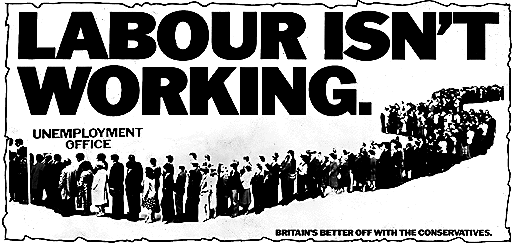
It ain’t cheap and it ain’t without its hazards. In the US for example, a candidate who won election to Congress in 2025 spent an average $3.07 million; in the Senate, the average spending for winning candidates was $29.19 million. The upcoming 2026 mid-terms and 2028 national elections will undoubtedly dwarf those amounts. Meanwhile, over in Britain the most renown practitioners of political advertising would have to have been the Saatchi brothers who made millions touting “Maggie’s” 1979 election victory powered by their “Labour Isn’t Working” campaign.
Other clients over the years included John Major, the “Better Together” Scottish independence campaign, and various UK government communications quangos. This led to Maurice becoming a lord whilst Charlie made enough dosh to create Britain’s most expensive collection of really bad modern art, whilst marrying Britain’s sexiest chef, Nigella Lawson, who later divorced him after she said in court that Charlie subjected her to “intimate terrorism” and threatened to destroy her. Perhaps by putting her in a giant fish tank with a rotting shark?
My only experience of working on a political campaign was in my Mad Man days when I worked on the 1969 re-election campaign for John Lindsey as the Mayor of New York City. In his first term, Lindsey fucked up really badly. So, being ad geniuses, we came up with a TV campaign that featured him admitting that he had fucked up badly, but had learned from his mistakes and would be so much better if given another chance. It worked!!! He got re-elected. Then he fucked up even worse. Which convinced me that political advertising is a waste of time. Unless you collect rotting sharks and loverrrly chefs.