Desert Island Ads.
Honda ‘Keep Up’
W+K London 2015
This came out just as short form video was exploding. Mobile video growth was massive, and most brands were still cutting down their TV ads and hoping for the best. ‘Keep Up’ did something different. It was just as perfect on the big cinema screen as your phone, because everything hung on that centre focus of the text. Wherever you watched it, your eyes went exactly where Honda wanted them.
It redefined mobile first storytelling through beautiful sound design, quirky details and text that drew you in and forced that precious attention. You couldn’t half watch it. The moment you looked away, you’d lost it – so you didn’t look away. It turned the viewer’s attention into the creative idea itself, and it tied that straight back to what Honda stands for: pushing yourself past your limits (in this case reading quickly).
It became the video I’d show the old guard of Unilever marketing to prove how a brand can be built in digital, at speed, through clear craft and focused creative flair. It was meant to be a UK campaign, and other European markets picked it up and ran with it, which tells you everything about how well the idea travelled.
Berghaus Mera Peak
Glenn Kitson
Glenn Kitson is a Bolton born, now London based creative, director and big coat supremo. He has a uniquely Northern approach to culture and filmmaking, and crucially, he is the Berghaus audience. He gets them, because he’s one of them.
He uses mixed media, pulls on culture and uses music to bring out the emotion and the coolness of the brand. The references run from Manchester through to the Peak District and the Lake District: the cosmic Scousers, the Mancunian mountain walkers, the whole culture of the big coat, all tied together with rave, music and identity.
It’s a world a lot of us grew up in, and he just nails it.
Berghaus reportedly handed full creative control over to Glenn, and you can tell. It moves from being an ad for the Mera Peak to being a passionate call to arms for big coats, for Berghaus, and for their role in British and Northern culture.
And then there are incredible lines like: “Why was he called Johnny Leather Pants? Because he wore f***ing leather pants.” No brand committee writes that line. That’s what real creative freedom in advertising gives you: something human and funny that encodes the brand deeper into your memory structures and makes you love it even more. It’s a fantastic ad, and a brilliant lesson in what happens when a brand trusts the right person.
The Guardian – Three Little Pigs
BBH London
On the more serious side of the advertising spectrum is the brilliant work by BBH London for The Guardian. I think it’s even more prescient today than it was when it was made.
It’s all about perspective: on the news, on the news cycle, on prejudices and tribalism, and on the world we live in now, which is algorithmically exploited by the platforms to farm attention. It takes a story everyone knows and shows how quickly it fractures once the front page, the comment threads and the social debate get hold of it.
Everyone has a take, and the truth turns out to be something nobody expected, which plays out in real time.
At its heart is a belief that people need to check their sources, understand other perspectives and really engage their brains to think about the world around them. Back in 2012 that was a smart way to sell open journalism. Today it reads like a warning. It’s a brilliant articulation of the dangers of a society sleepwalking into an algorithmically unchecked world that farms anger for likes. Very few ads get more relevant with age. This one has.
Reebok – Terrible Terry Tate Office Linebacker “Superbowl Spot”
Peter Arnell and the Arnell Group
The beauty of Terry Tate was that it came in the really early days of branded content, long before anyone had a name for it. The brand had an incredible role, but it earned that role by bringing pure entertainment to the audience. It wasn’t interrupting what you wanted to watch. It was the thing you wanted to watch.
It was hilarious. It played off the back of US culture like Office Space and that whole early 00’s comedy scene and unique internet sense of humour. It took a simple premise, a massive linebacker enforcing the boring day to day office rules, and committed to it completely. It massively captured the audience’s attention, even back then when attention was easier to grab. Plenty of brands had that chance and wasted it. Reebok didn’t.
It wasn’t a one-off either. It was a series of content, which was fantastic at bringing the brand to life and keeping people coming back. It went across the Atlantic. I remember being younger, finding it online, absolutely loving it and sharing it with all my friends. That kind of ‘in the know’ cultural capital and word of mouth before social media made it easy, is exactly what every brand still wants today. It made Reebok cool again, and I still share it to this day whilst wearing my Reebok Classics (but that’s probably more down to Mike Skinner than TTT).
Barnardos – “Break the Cycle”
BBH London
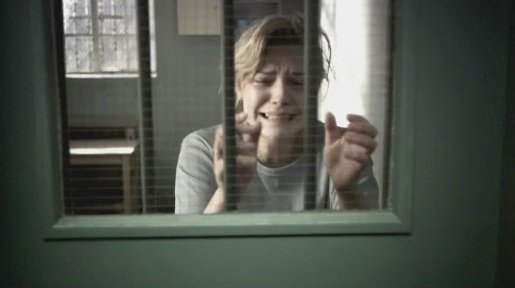
Another brilliant piece of work from BBH London. Break the Cycle drew 477 complaints to the Advertising Standards Authority, because it was so raw and so real. I think people felt truly uncomfortable seeing it, because rather than pretending, BBH leant right into the reality: the violence cycle, the poverty cycle, the cycle of injustice that repeats and repeats against children and then puts them on long-term pathways into adulthood. The ASA cleared it, and rightly so. The discomfort was the point.
The brilliance of it is that, as a children’s charity, Barnardo’s could easily have gone for the soft, safe version. Instead, advertising was used to really highlight the amazing work Barnardo’s and other children’s charities do in intervening early and getting better outcomes for children. It doesn’t just ask you to feel sorry. It shows you why early help matters.
That’s advertising in its true form: to change behaviour and change the way people think. It’s a reminder that what we do can be about far more than selling things.
 Ben Morrison is managing partner creative & strategy at
Open Partners.